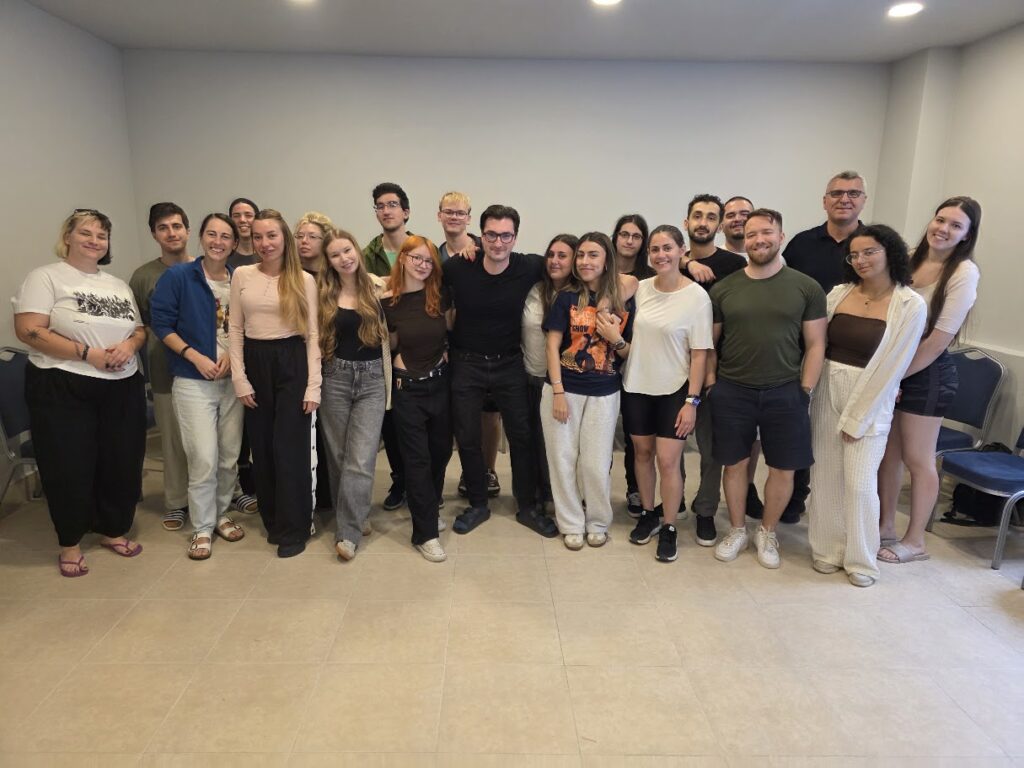
From 15 to 23 April, our team took part as a partner organization in the Erasmus+ training course “Knowledge is Happiness: The Best Eco is Umberto Eco,” held in Alanya, Türkiye, and organized by ARYAS NGO. The training course brought together youth workers from Romania, Türkiye, Serbia, Greece, North Macedonia and Poland, all connected by an interest in ecology, non-formal education and youth work.
Over the course of seven days, participants worked through the SENSE methodology, an approach that connects meaning-making, curiosity and learning through personal experience with eco-oriented attitudes and actions, understanding ecology as our relationship with ourselves, our community and nature.
Exploring, testing and building together
Each day of the training was organized around exploratory workshops, applied labs and group work. Participants were introduced to the main concepts behind the “Knowledge is Happiness” strategy and discussed how these ideas connect to their daily work with young people. In mixed groups, they tested and adapted non-formal methods that build curiosity and meaning-making, and worked together on a practical training framework that youth workers can apply in their own organizations and in future Youth Exchanges.
Alongside the workshops, the programme included dedicated sessions for networking and cooperation building, giving participants the chance to strengthen existing partnerships and form new ones within the Knowledge is Happiness framework.
Mutual learning at the center
A key value of this project was mutual learning. Through discussions, knowledge exchange and collaborative activities, participants strengthened their competencies in youth work and left with practical tools they can use in their local contexts.
We continue to support the development of youth and youth workers, with the belief that knowledge gains its true value when it is shared. We would like to thank ARYAS NGO for organizing this training course and for the invitation to take part, together with all the partner organizations who made this exchange of knowledge possible.