
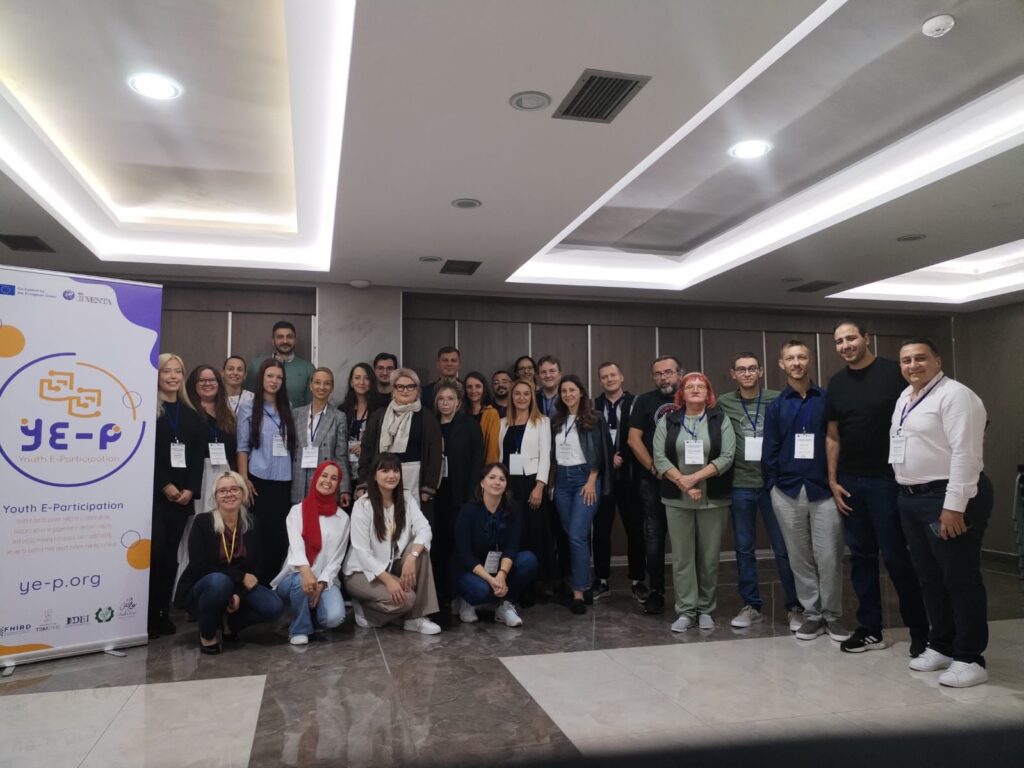
This week, our team took part in the international conference “Youth E-Participation: Strengthening Digital Engagement in Democratic Life,” held in Vrnjačka Banja, Serbia, from 26 to 27 September 2025. The conference was organized by NGO Iuventa, together with partner organizations from Europe and the MENA region, as the final event of the Youth E-Participation (YE-P) project, funded under the Erasmus+ programme of the European Union.
The event brought together policy makers, civil society organizations, youth workers, educators, researchers and young leaders from Serbia and abroad, all connected by one goal: to strengthen the role of young people in democratic life through digital tools and platforms.
Learning from experience
The first day opened with welcome speeches from representatives of the Municipality of Vrnjačka Banja, the Ministry of Tourism and Youth of the Republic of Serbia, and the Erasmus+ National Agency in Serbia, followed by the official presentation of the YE-P project by Ms. Dijana Puškar, project coordinator and president of NGO Iuventa.
Throughout the day, we listened to speakers from organizations such as the European Youth Forum, KOMS (National Youth Council of Serbia), UNICEF, the Office for IT and eGovernment of Serbia, and the Connecting Youth Balkans platform. They presented digital tools and platforms already used to give young people a voice in policymaking, from e-consultations to online civic platforms. The day continued with a panel on youth e-participation practices, featuring RYCO, NAPOR, the Youth European Ambassadors network, Civic Initiatives and the Belgrade Open School, each sharing their experience of supporting young people’s digital engagement.
From discussion to recommendations
The second day focused on practical work. After hearing from speakers including the Ana and Vlade Divac Foundation, Proaktiv Niš, and colleagues from Romania and Egypt on educational innovation and youth e-participation in the MENA region, participants moved into working groups.
Together with other participants, we discussed four important areas: local youth e-participation, national and European youth policies, inclusive access for marginalized, rural and refugee youth, and the role of CSOs and youth workers in supporting digital engagement. Each group developed concrete recommendations for advancing youth e-participation in Europe, which were presented in the closing plenary session.
Our takeaways
Digital engagement is becoming an important part of how young people participate in decisions that affect their lives, and we believe non-formal education has an important role to play in preparing youth workers and young people for this shift. Being part of this conference gave us the opportunity to exchange ideas with organizations from different countries, learn about good practices already in use, and contribute to recommendations that can shape future policies and projects in this field.
We would like to thank NGO Iuventa and all partner organizations for organizing this conference and for the invitation to take part. We look forward to bringing these insights into our own work with young people in Serbia.